RESTful API Lab 3
Files
src/main/java/com/tus/accounts
- AccountsConstants
- /constants/AccountConstants.java
- AccountController POST
- /controller/AccountController.java
- Service & ServiceImpl
- /service/IAccountsService.java
- /service/impl/AccountsServiceImpl.java
- AccountsMapper & CustomerMapper
- /mapper/AccountsMapper.java
- /mapper/CustomerMapper.java
- AccountsServiceImpl createAccount
- /service/IAccountsService.java
- /service/impl/AccountsServiceImpl.java
- Controller - Call Service Layer
/AccountController.java
- H2 Console Table
- Postman
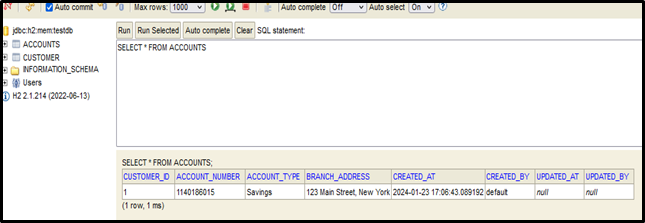
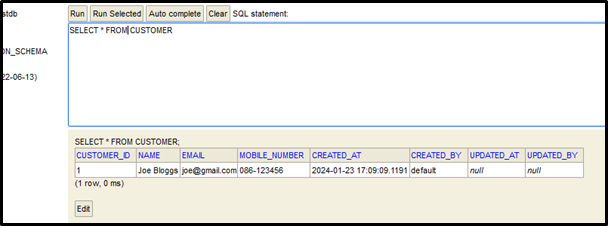
- H2 Console Data
Lab#3 Building a Rest API to support the creation of a new account and customer details.
In this lab we are creating the API that will allow the creation of a new account and customer.
Note: If you have problems with Lombok
https://stackoverflow.com/questions/35842751/lombok-not-working-with-sts
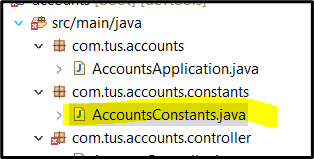
1. AccountsConstants
Add class AccountsConstants provided to a new package com.tus.accounts.constants. This class will store error messages.
2. AccountController POST
Update the AccountController class for the PostMapping as shown. You can add /accounts to the PostMapping path
AccountController.java@RestController
@RequestMapping(path = "/api", produces = MediaType.APPLICATION_JSON_VALUE)
public class AccountController {
@PostMapping()
public ResponseEntity<ResponseDto> createAccount(@RequestBody CustomerDto customerDto) {
return ResponseEntity
.status(HttpStatus.CREATED)
.body(new ResponseDto(AccountsConstants.STATUS_201, AccountsConstants.MESSAGE_201));
}
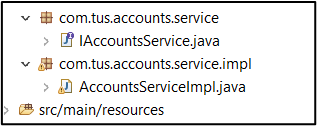
3. Service & ServiceImpl
Add a packages service and serviceImpl. These will hold the interface for the Service layer and its implementation. Note: don’t need to use @Autowired in Springboot 3.
| IAccountsService.java |
|---|
| package com.tus.accounts.service;
import com.tus.accounts.dto.CustomerDto;
public interface IAccountsService {
void createAccount(CustomerDto customerDto);
}
|
| AccountsServiceImpl.java |
|---|
1
2
3
4
5
6
7
8
9
10
11
12
13
14
15
16
17
18
19
20
21 | package com.tus.accounts.service.impl;
import org.springframework.stereotype.Service;
import com.tus.accounts.dto.CustomerDto;
import com.tus.accounts.repository.AccountsRepository;
import com.tus.accounts.repository.CustomerRepository;
import com.tus.accounts.service.IAccountsService;
import lombok.AllArgsConstructor;
@Service
@AllArgsConstructor
public class AccountsServiceImpl implements IAccountsService {
private AccountsRepository accountsRepository;
private CustomerRepository customerRepository;
public void createAccount(CustomerDto customerDto) {
// TODO
}
}
|
4. AccountsMapper & CustomerMapper
We will now create a mapper class (code given) for AccountsMapper and CustomerMapper. This is to map data between the Entity classes and the DTO classes.
| CustomerMapper.java |
|---|
1
2
3
4
5
6
7
8
9
10
11
12
13
14
15
16
17
18
19
20 | package com.tus.accounts.mapper;
import com.tus.accounts.dto.CustomerDto;
import com.tus.accounts.entity.Customer;
public class CustomerMapper {
public static CustomerDto mapToCustomerDto(Customer customer, CustomerDto customerDto) {
customerDto.setName(customer.getName());
customerDto.setEmail(customer.getEmail());
customerDto.setMobileNumber(customer.getMobileNumber());
return customerDto;
}
public static Customer mapToCustomer(CustomerDto customerDto, Customer customer) {
customer.setName(customerDto.getName());
customer.setEmail(customerDto.getEmail());
customer.setMobileNumber(customerDto.getMobileNumber());
return customer;
}
}
|
| AccountsMapper.java |
|---|
1
2
3
4
5
6
7
8
9
10
11
12
13
14
15
16
17
18
19
20 | package com.tus.accounts.mapper;
import com.tus.accounts.dto.AccountsDto;
import com.tus.accounts.entity.Accounts;
public class AccountsMapper {
public static AccountsDto mapToAccountsDto(Accounts accounts, AccountsDto accountsDto) {
accountsDto.setAccountNumber(accounts.getAccountNumber());
accountsDto.setAccountType(accounts.getAccountType());
accountsDto.setBranchAddress(accounts.getBranchAddress());
return accountsDto;
}
public static Accounts mapToAccounts(AccountsDto accountsDto, Accounts accounts) {
accounts.setAccountNumber(accountsDto.getAccountNumber());
accounts.setAccountType(accountsDto.getAccountType());
accounts.setBranchAddress(accountsDto.getBranchAddress());
return accounts;
}
}
|
5. AccountsServiceImpl createAccount
Update the AccountsServiceImpl with the method for creating a new account base on a CustomerDto object.
| AccountsServiceImpl.java |
|---|
 1
 2
 3
 4
 5
 6
 7
 8
 9
10
11
12
13
14
15
16
17
18
19
20
21
22
23
24
25
26
27
28
29
30
31
32
33
34
35
36
37
38
39
40
41
42 | import lombok.AllArgsConstructor;
import com.tus.accounts.entity.Accounts;
import com.tus.accounts.entity.Customer;
import com.tus.accounts.mapper.*;
@Service
@AllArgsConstructor
public class AccountsServiceImpl implements IAccountsService {
// framework will automatically autowire as one single constructor
private AccountsRepository accountsRepository;
private CustomerRepository customerRepository;
//@Override
public void createAccount(CustomerDto customerDto) {
Customer customer = CustomerMapper.mapToCustomer(customerDto, new Customer());
customer.setCreatedAt(LocalDateTime.now());
customer.setCreatedBy("default");
customer.setUpdatedAt(LocalDateTime.now());
customer.setUpdatedBy("default");
Customer savedCustomer = customerRepository.save(customer);
accountsRepository.save(createNewAccount(savedCustomer));
}
/**
* @param customer - Customer Object
* @return the new account details
*/
private Accounts createNewAccount(Customer customer) {
Accounts newAccount = new Accounts();
newAccount.setCustomerId(customer.getCustomerId());
long randomAccNumber = 1000000000L + new Random().nextInt(900000000);
newAccount.setAccountNumber(randomAccNumber);
newAccount.setAccountType(AccountConstants.SAVINGS);
newAccount.setBranchAddress(AccountConstants.DEFAULT_BRANCH_ADDRESS);
newAccount.setCreatedAt(LocalDateTime.now());
newAccount.setCreatedBy("default");
newAccount.setUpdatedAt(LocalDateTime.now());
newAccount.setUpdatedBy("default");
return newAccount;
}
}
|
6. Controller - Call Service Layer
Update the controller to call the service layer
17
18
19
20
21
22
23
24
25
26
27
28
29
30
31
32 | @RestController
@RequestMapping(path = "/api", produces = MediaType.APPLICATION_JSON_VALUE)
//@AllArgsConstructor
@Validated
public class AccountController {
private IAccountsService iAccountsService;
@PostMapping()
public ResponseEntity<ResponseDto> createAccount(@RequestBody CustomerDto customerDto) {
iAccountsService.createAccount(customerDto);
return ResponseEntity
.status(HttpStatus.CREATED)
.body(new ResponseDto(AccountsConstants.STATUS_201, AccountsConstants.MESSAGE_201));
}
}
|
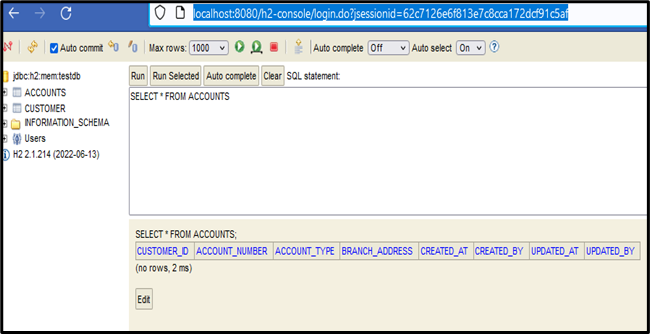
7. H2 Console Table
Run the project and check the h2-console. The tables should be created and empty.
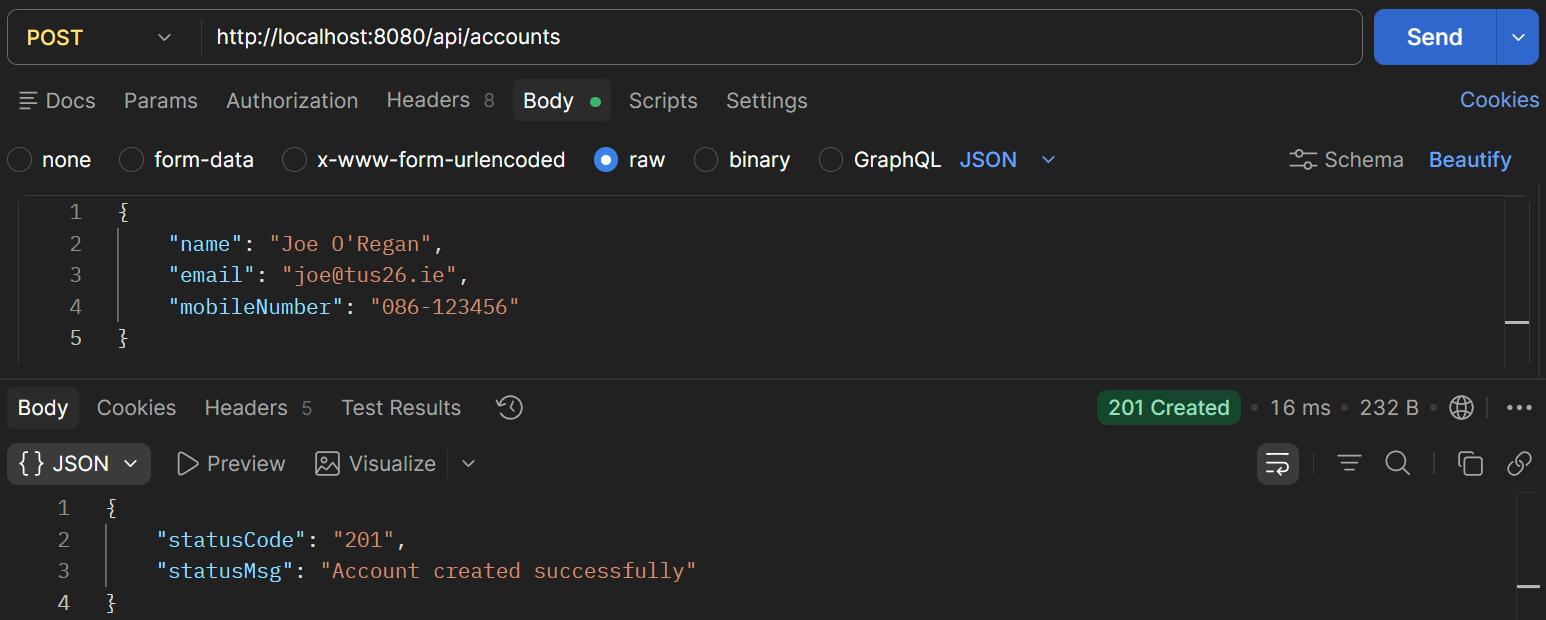
8. Postman
Create a new customer from postman. You should get response code 201 and message as shown below.
POST http://localhost:8080/api/accounts{
"name": "Joe O'Regan",
"email": "joe@tus26.ie",
"mobileNumber": "086-123456"
}
9. H2 Console Data
Check that the data has been written to the database